The final photographs should feel like the last page of a beautiful story: guests gathered close, light catching the architecture, and the newlyweds departing with equal parts joy and polish. The best wedding exit ideas do more than create a memorable image. They give the celebration a true sense of occasion, leaving guests with one final, cinematic impression of the evening.
For a French-inspired wedding, restraint is often the most luxurious choice. A send-off need not be loud, complicated, or crowded with props to feel extraordinary. The right exit complements the venue, the season, your attire, and the rhythm of your reception.
Choosing the Best Wedding Exit Ideas for Your Celebration
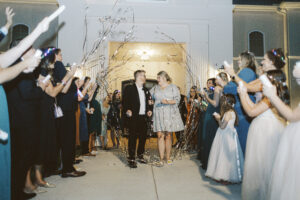
Before selecting an exit, consider what you want the moment to accomplish. Is it your actual departure after a late-night reception? A staged send-off before guests leave? Or a private farewell captured with only your photographer and wedding party? Each option creates a different atmosphere and requires different planning.
A true late-night exit has unmistakable energy, but it can be difficult to gather guests once the dance floor is in full motion. A planned “faux exit” shortly after dinner or cake cutting is often the more polished choice. Your entire guest list is still present, your floral details are fresh, and your photographer has more control over the composition. Then, you can return to the reception and enjoy the evening without rushing toward the car.
Your venue’s guidelines should shape the decision as well. Open flames, confetti, glass, and loose materials can be restricted for good reason. Ask early about permitted products, cleanup expectations, vehicle access, and the ideal location for photographs. The most graceful exit is one that feels effortless for guests and respectful of the property.
Candlelit Sparklers
Sparklers remain a beloved choice because they offer movement, warmth, and a celebratory glow. A corridor of golden light feels especially striking against a grand façade or evening courtyard. For an elevated result, choose long wedding sparklers, appoint a few attendants to distribute and light them, and ask guests to hold them high rather than wave them close to your gown. 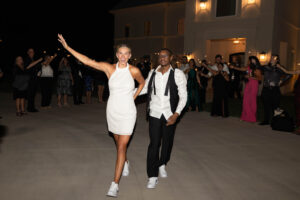
There are trade-offs. Sparklers require careful fire-safety planning, a designated disposal container, and enough space for a comfortable path. They are not appropriate for every venue or weather condition. If permitted, they are best photographed after twilight, when the ambient light is low enough for the sparks to register without losing the detail in your dress and surroundings.
A Vintage Getaway Car
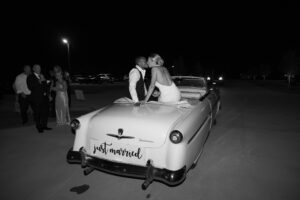
A beautiful departure vehicle needs very little embellishment. A classic Rolls-Royce, Bentley, vintage convertible, or impeccably restored European motorcar sets the tone before you have even stepped inside. It is an ideal choice for couples who want an editorial exit without asking every guest to participate.
Keep the styling considered: silk ribbon, a discreet “just married” detail, or a small floral moment on the rear of the car is enough. Avoid oversized signs and novelty decorations if your overall design leans timeless. The sound of the door closing, the trailing ribbons, and a final wave from the back seat can be more memorable than an elaborate prop-filled procession.
Plan the Vehicle Entrance and Exit
Confirm the vehicle’s arrival time, turning radius, and parking location with your venue and transportation provider. A grand car deserves a clear approach and a clean backdrop. If the exit takes place after dark, subtle exterior lighting will help preserve the romance of the moment in photographs.
White Rose Petals
For a softer, daylight-friendly farewell, white rose petals offer movement without overwhelming the scene. They suit garden ceremonies, courtyard receptions, and early evening exits where sparklers would feel out of place. The effect is delicate and romantic, particularly when guests toss petals upward only after the couple has begun walking.
Use real petals if your venue permits them, and select a quantity generous enough to read in photographs. Artificial petals can appear overly uniform and may create additional cleanup concerns. This is also a lovely option for a ceremony recessional, allowing you to preserve the formal exit for later in the evening.
Ribbon Wands in a Refined Palette
Ribbon wands bring color and movement while keeping the exit quiet, orderly, and guest-friendly. They are particularly practical for an afternoon wedding or a celebration with young guests. Choose silk or satin ribbons in shades that belong naturally to your palette: ivory, champagne, pale blue, soft blush, or deep French blue.
The difference is in the edit. Limit the colors, use matching wand lengths, and avoid adding bells or plastic ornaments. When guests line the path and lift their ribbons together, the result feels airy and joyful, with no debris scattered across the grounds.
A Champagne Toast at the Doors
Not every farewell requires a tunnel. For an intimate guest count or a wedding centered on dinner and hospitality, gather your closest guests at the entrance for a final champagne toast. Step outside together, raise a coupe, and take a few unhurried photographs before departing.
This approach feels distinctly European and beautifully personal. It also allows you to savor a quiet transition from reception to getaway rather than rushing through a crowd. Coordinate glassware and service in advance, and keep the toast brief so the moment remains spontaneous rather than ceremonial.
Cold Sparks for a Dramatic After-Dark Exit
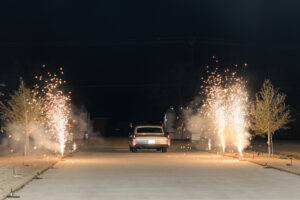
Cold spark fountains create a high-impact backdrop for couples who want an unmistakably grand finale. Unlike handheld sparklers, the effect is structured and symmetrical, making it particularly suited to a formal exit down a wide terrace or exterior drive. It is dramatic, clean-lined, and flattering in both still photographs and video.
This option requires a professional vendor, venue approval, and a thoughtful timing plan. Cold sparks can be a wonderful choice for a late reception, but they should never compete with a quiet, romantic setting where subtlety is the goal. Let the architecture and the couple remain the focus.
A Private Last Dance, Then a Quiet Departure
Some of the most moving exits happen after the guests have gone. Ask your planner or band to clear the room for one final dance, then leave through the doors together while your photographer captures the stillness. There is no confetti, no performance, and no need to coordinate a crowd.
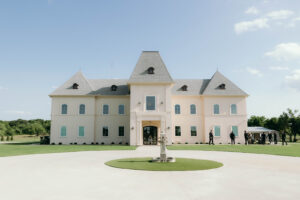
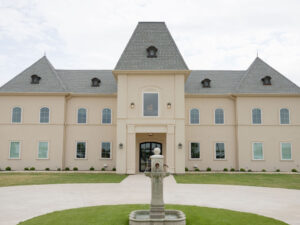
For couples who value candid emotion over spectacle, this can be the most meaningful choice of all. At CHÂTEAU JOLI, a quiet departure after a final dance can let the evening’s French-inspired grandeur linger in the frame: the glow of the reception behind you, the architecture ahead, and a moment that belongs only to the two of you.
Details That Make an Exit Feel Effortless
The best exits are carefully orchestrated behind the scenes. Tell guests what to do with a short announcement from your DJ, bandleader, or planner. Have your coordinator position the group, distribute materials, and keep the path clear. Your photographer should know where the car will stop, which direction you will walk, and whether you want to pause for a kiss or a final wave.
Give yourselves permission to keep the moment brief. A polished exit typically takes only a few minutes. Walk slowly, look at each other more than the camera, and let the excitement around you do the rest. If you are wearing a veil with a long train, ask a trusted attendant to help it move freely without becoming the center of attention.
The most beautiful send-off is not necessarily the one with the most spectacle. Choose the farewell that feels true to the atmosphere you have created, then leave just enough room for the night to feel a little magical.